








Dan G
Dan G
Consulting Technical Artist
Dan Galbraith - Technical Artist
@magpiebusiness.bsky.social

About Me

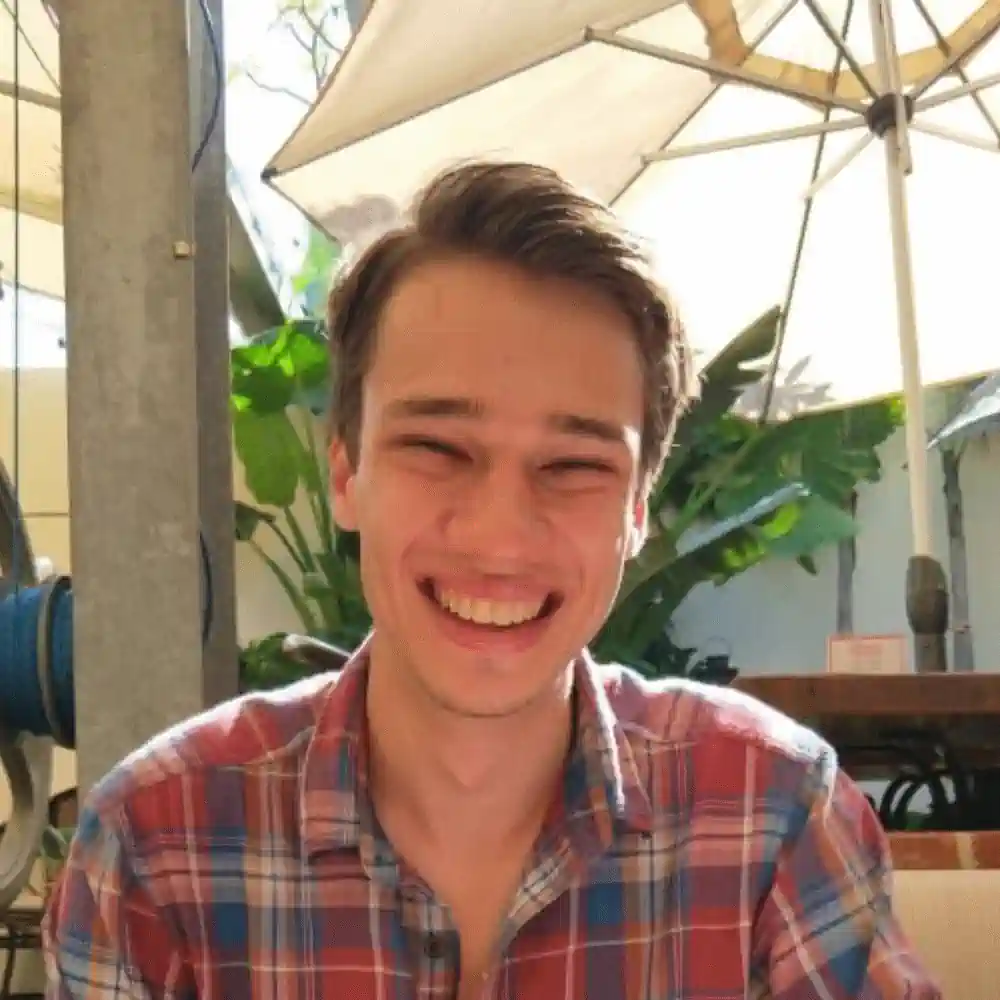
Dan G is a technical artist and rendering engineer who likes to wear as many different hats as possible. He's very tall, and really loves cats.

Dan has worked at many studios across Australia including Playside, SMG Studios, Mountains, and Spunge, in roles ranging from ad-hoc tooling for scrappy indies, through to Lead Tech Artist for a dedicated, fifteen-person rendering team.

Along the way he's built a number of Serious Games for Queensland universities, and independently released a co-op party game about very poor parenting called Think of the Children.

When he doesn't have his head buried in RenderDoc, Dan moonlights as a tabletop game designer alongside his partner, Juno. Juno and Daniel successfully funded their first board game, Isle of Feathers, on Kickstarter in September 2025, exceeding their funding goal by more than 500%.

Whatever you're building, no matter the scale, I'd love to help bring it to life.

Some Recent Work

LEGO® Party!

SMG studio

Lead Technical Artist | 2021 - 2023

PC, Switch, PS4, PS5, XBox One, XBox Series XS

LEGO® Party! is a cross-platform multiplayer party game developed by SMG Studio. I took on the role of Lead Technical Artist for the first two years of the project's development.

LEGO® Party!

2021 - 2023

As Lead Technical Artist, I was responsible for the following:

Cofounding and leading the Tech Art Team

During my time at SMG I cofounded the project's Tech Art team and oversaw its expansion from 3 to 15 fulltime members. I was responsible for writing job postings, reviewing hiring decisions, and supporting the professional development of team members.

Defining rendering approach and visual identity

I worked closely with the Art Director and Senior Executive teams to establish the game's rendering treatment, defining its visual identity amongst other contemporary LEGO® games. I was responsible for establishing the team's approach for recreating the specific 'look' of LEGO® bricks in a performance-critical context (including the design of shader libraries and lighting pipelines).

Developing a bespoke asset creation pipeline

I lead development of the project's purpose-built Brick Asset Pipeline, which allowed the team's LEGO® Master Builders to create designs that follow real-world building guidelines, then import and programatically convert the LEGO® layout data into gameplay-ready geometry.

Designing a realtime, brick-based VFX engine

I designed and built the BrickFX system; a bespoke, voxel-based VFX engine for rendering complex volumetric effects such as smoke and fire as chunks of brick-built LEGO®. The system supported playback of pre-generated effects, but could also convert dynamically-changing volumes into brick representations in real time.

Production planning and scheduling

I was responsible for high-level production planning and scheduling for project-wide Tech Art infrastructure development, along with day-to-day tasking and prioritisation in conjuction with the production team.

Performance optimisation and best practices

I was responsible for identifying performance optimisation and asset implementation bottlenecks project-wide, and making best practice recommendations for other teams on how specific goals could be achieved on target hardware.

Dumb Ways: Free For All

SMG studio

Senior Technical Artist | 2024 - 2025

Meta Quest 2, Meta Quest 3

Dumb Ways: Free for All is a multiplayer, vr party game for 1-6 players, released on the Meta Quest 2 and 3 by Playside Studios. I took on the role of Senior Technical Artist on the project until the game's launch, and assisted preparation for the first two rounds of DLC.

Dumb Ways: Free for All

2024 - 2025

I was brought onto the project primarily in a rendering engineering capacity, due to the substantial performance challenges associated with a physics-based, multiplayer VR title.

As a result, I was given a fairly broad remit to move between project teams as needed, in order to direct optimisation efforts and establish creation workflows for performant assets and FX elements.

Tech Art and defining rendering approach

One of my initial tasks on the project involved overhauling the project-wide rendering approach to closer match the intended visual styling. I worked closely with the Art Director to refine the game's visual identity, removing the default URP shaders and creating a performant rendering treatment that closer resembled the established art style of existing Dumb Ways titles.

Establishing a standardised, artist-focused shader creation workflow

As part of the above, I worked closely with the project's 3D and VFX team to implement workflows and best practices for rapid iteration, resuable, and performant assets and FX. The project used a mixture of node-based shaders from both Shader Graph and Amplify Shader Editor interchangably, along with Bakery, a third-party light baking tool. Feature parity and compatibility was limited, resulting in inconsistent visuals between game environments and substantial performance optimisation challenges.

Together with the VFX team, I standardised the shader authoring workflow, creating a library of shader templates that could be used as-is, or extended as needed via Amplify, while maintaining compatibility with the light baking tooling and the Universal Render Pipeline's SRP Batcher. This allowed members of the art team to modify, extend, and iterate on the game's core shaders to produce specific effects as needed, while being confident that their work will integrate seamlessly into the existing rendering and authoring workflows.

Rendering Engineering and performance optimisation

As part of the above, I worked closely with the Lead Programmer to replace the existing rendering infrastructure with a bespoke, performant solution that would reach performance target on Quest devices.

During this process I carried out extensive auditing and analysis of performance bottlenecks project-wide, and created optimisation plans for reaching perf targets across both Quest devices. During implementation of these plans, I was also able to create systems and tooling for automatically configuring project scenes at build time for optimal batching and shader variant setup.

Thanks to the support of the Leads and Directors, I was able to work alongside the programming and art teams as needed to implement performance improvements project-wide, in a maintainable manner for upcoming DLC.

Resume

Say Hello!